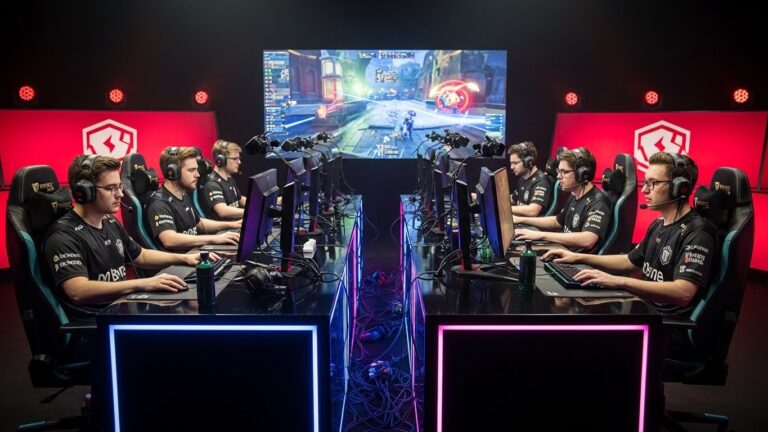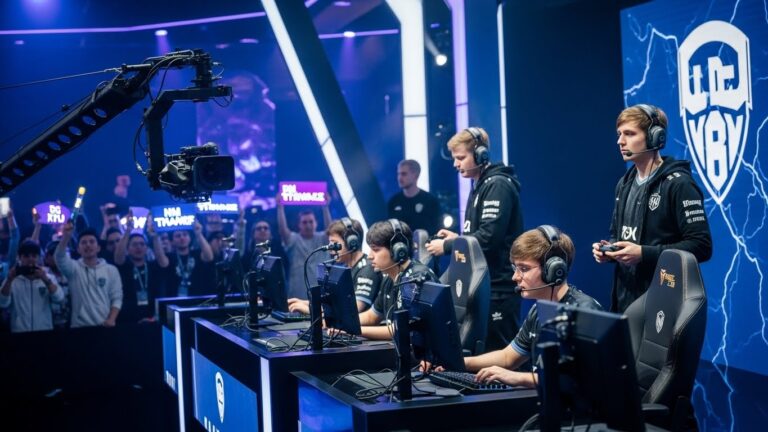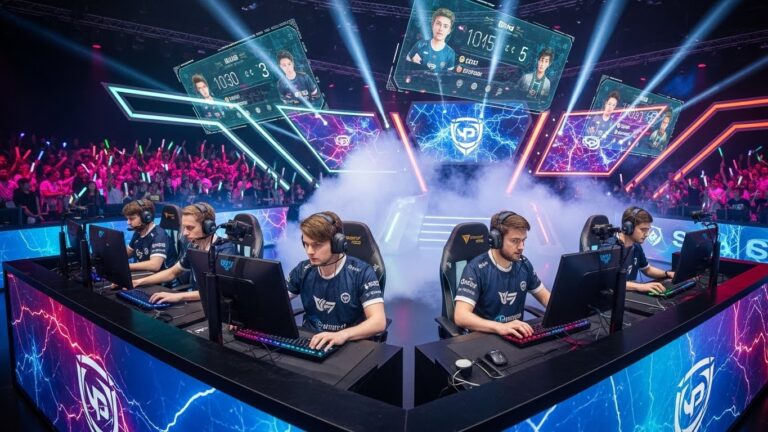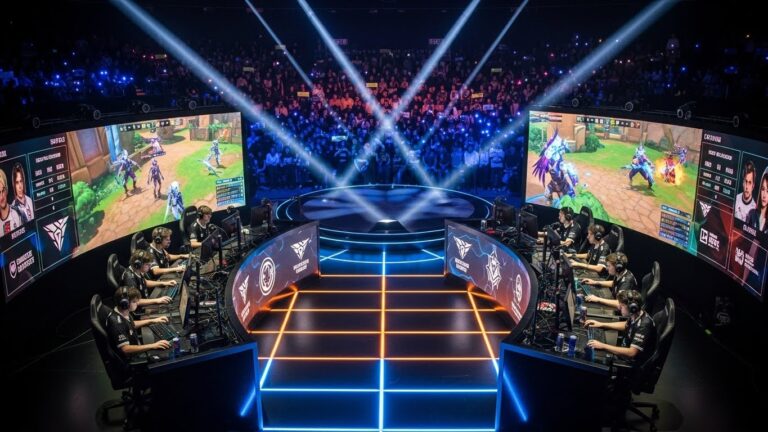
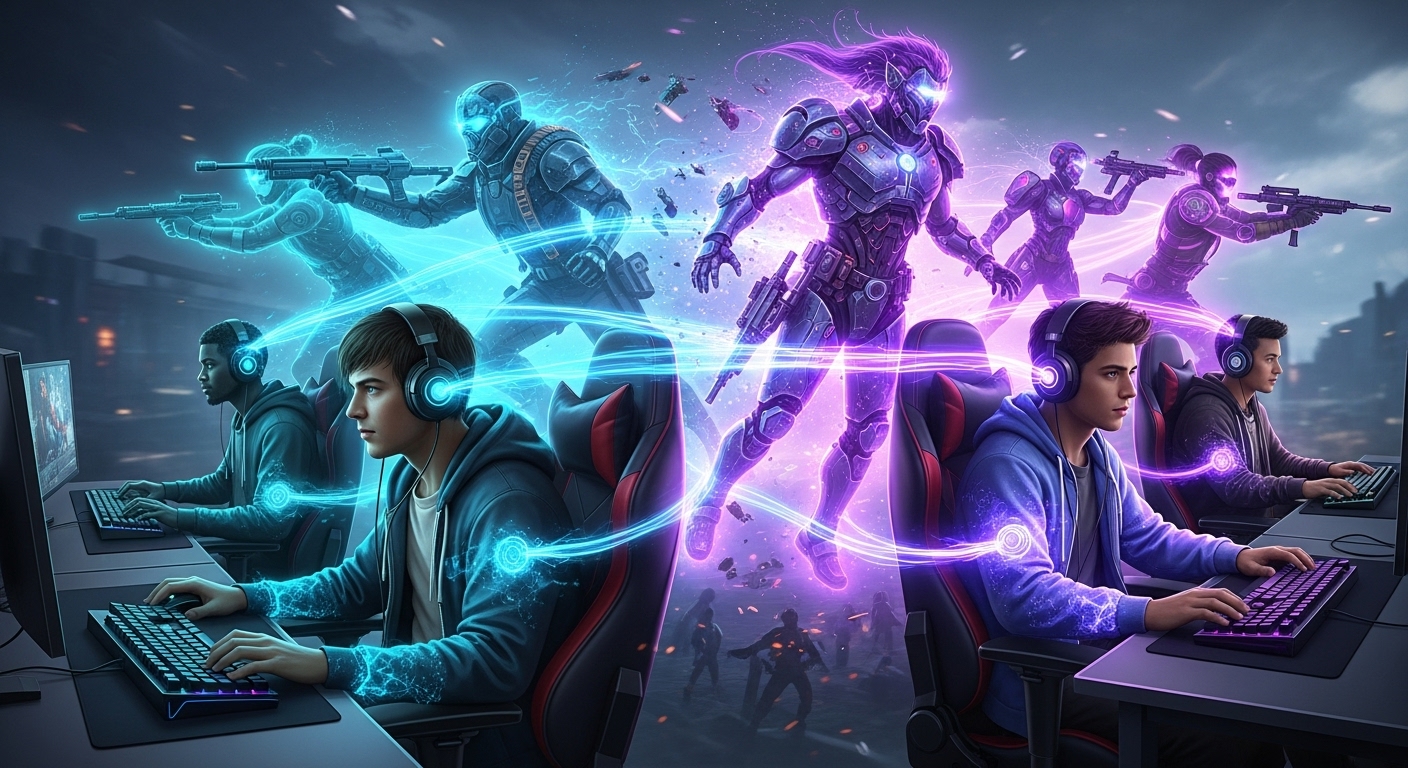
Introduction: The Digital Arena Comes Alive
In the past few decades, the way we play, compete, and entertain ourselves has transformed dramatically. Among the most striking examples of this change is the explosive rise of esports — organized, competitive video gaming that has grown from a niche pastime into a billion-dollar global industry. What was once dismissed as a hobby for teenagers in dimly lit basements has now become a global entertainment powerhouse, filling stadiums, generating massive online viewership, and creating professional athletes who compete for life-changing prize money.
The story of esports is not just about gaming. It’s about how technology, culture, and human competition have evolved together in the digital age. It’s about the people who pushed the boundaries of what games could mean to society and turned virtual play into a serious, respected sport.
The Origins of Esports: Humble Beginnings
Esports didn’t appear overnight. The roots of competitive gaming can be traced back to the early 1970s, when video games themselves were still a novelty. The first recorded gaming competition took place in 1972 at Stanford University, where students competed in the game “Spacewar!” for a prize of a magazine subscription. It was a small event, but it set the tone for what was to come — a merging of technology and competition.
By the 1980s, the arcade boom had swept across the world, and high score competitions became a common form of rivalry among gamers. Titles like “Pac-Man” and “Donkey Kong” brought players together to challenge one another, and gaming magazines started publishing leaderboards to track top scorers. This was the first real taste of fame that gamers could achieve, long before streaming platforms or online tournaments existed.
In the 1990s, with the rise of home consoles and personal computers, multiplayer gaming began to evolve. Local area network (LAN) parties became popular, allowing players to connect computers together and battle in games like “Doom,” “Quake,” and “StarCraft.” The atmosphere at these gatherings — the energy, the tension, the camaraderie — would later become the foundation for the esports culture that thrives today.
The Turn of the Millennium: Esports Finds Its Footing
The 2000s were a pivotal decade for esports. Broadband internet was becoming more accessible, online gaming platforms were emerging, and games were being designed with competition in mind. Titles like “Counter-Strike,” “Warcraft III,” and “Halo” built strong competitive communities that organized their own tournaments, often streamed over primitive video services or recorded for later viewing.
South Korea played a particularly important role during this era. With fast internet and a passionate gaming culture, the country became the global epicenter of early esports. The launch of “StarCraft: Brood War” in 1998 ignited a competitive scene unlike anything seen before. Professional players became national celebrities, gaming TV channels aired matches live, and packed arenas watched gamers compete for prestige and prizes. This was the birth of modern esports professionalism — structured teams, sponsorships, coaches, and fanbases.
Meanwhile, in North America and Europe, esports began to gain traction through grassroots tournaments and local LAN events. Organizations like Major League Gaming (MLG) in the United States helped give esports a legitimate competitive framework. Though mainstream recognition was still years away, the seeds had been firmly planted.
The 2010s: Esports Enters the Mainstream
If the 2000s were about laying the foundation, the 2010s were the decade when esports exploded into the mainstream. Two major forces drove this transformation: streaming and social media. The launch of Twitch in 2011 revolutionized how gaming content was consumed. Suddenly, fans could watch professional players and tournaments live from anywhere in the world. What was once a niche subculture was now a massive spectator sport accessible to millions.
The games themselves evolved too. “League of Legends,” “Dota 2,” and “Counter-Strike: Global Offensive” became household names among gamers, each fostering competitive ecosystems supported by their developers. The “League of Legends World Championship” began filling entire arenas and attracting global audiences comparable to traditional sporting events. “Dota 2’s” annual tournament, “The International,” set records for prize pools that reached tens of millions of dollars, crowdfunded by the game’s own community.
In parallel, first-person shooter games like “Call of Duty” and “Overwatch” built thriving professional leagues, complete with city-based franchises, structured seasons, and televised events. For the first time, esports players were signing contracts worth hundreds of thousands of dollars, traveling internationally, and living the lives of professional athletes.
The Culture of Esports: Passion, Pressure, and Performance
Behind the glitz and spectacle, esports is built on raw passion. At its core, it’s about players striving to master their craft — about reaction times measured in milliseconds, strategic decisions made under immense pressure, and teamwork that rivals any traditional sport. But it’s also an intense and demanding lifestyle. Players often practice for ten to twelve hours a day, studying their opponents, refining strategies, and maintaining peak performance.
The pressure can be immense. Young players sometimes enter the professional scene as teenagers, balancing fame, expectations, and mental health challenges in an environment that demands constant excellence. The lifespan of a professional esports athlete is often short, not because of physical injuries but due to burnout and fatigue. As the industry matures, teams and organizations have started placing greater emphasis on player welfare, introducing coaches, psychologists, and nutritionists to support their athletes.
Beyond the players, the esports community thrives on a deep sense of belonging. Fans form close-knit groups online, create fan art, follow their favorite teams, and celebrate victories as passionately as any football or basketball supporter would. This global community, bound by digital connectivity and shared enthusiasm, has helped turn esports into a cultural movement that transcends borders.
Technology and Innovation: The Engines Behind the Growth
Technology has always been at the heart of esports. Every leap forward in internet connectivity, graphics processing, or streaming capability has amplified its reach. In the early days, slow connections limited the potential of online competition. Today, fiber networks, cloud infrastructure, and real-time broadcasting technology make it possible to stream matches in 4K quality with virtually no delay.
Artificial intelligence and data analytics have also become integral to modern esports. Teams analyze player performance using heat maps, reaction time tracking, and predictive models. AI-driven tools help coaches identify weaknesses and optimize strategies. Meanwhile, virtual reality (VR) and augmented reality (AR) are beginning to offer new ways for fans to experience matches — bringing them closer to the action than ever before.
Esports has also benefited from gaming hardware innovation. High-refresh-rate monitors, mechanical keyboards, precision mice, and gaming chairs have all contributed to improving performance and comfort, while also spawning an entire industry of specialized peripherals and sponsorships.
The Economics of Esports: A Thriving Industry
Esports is not just entertainment; it’s a serious business. In recent years, it has become one of the fastest-growing segments of the entertainment industry, drawing major investment from brands, advertisers, and venture capitalists. Revenues come from a mix of sources — sponsorships, media rights, ticket sales, merchandise, and digital goods — creating a sustainable ecosystem that supports teams, organizers, and game developers.
Traditional sports organizations have also joined the fray. Football clubs like Paris Saint-Germain and Manchester City have launched esports divisions, while the NBA’s “2K League” and Formula 1’s virtual competitions have blurred the line between real-world and digital sports. The global esports market is now worth billions, and its audience — composed mainly of millennials and Gen Z — represents a valuable demographic for marketers seeking to engage with digital-native consumers.
Prize pools have reached astonishing levels. The biggest tournaments now rival, and sometimes surpass, major sporting events in payout. Yet, what’s perhaps most fascinating is that esports has democratized competition in a way few other sports can. Anyone with a computer, console, and talent can, in theory, rise to the top. The barriers to entry are lower, but the competition is fierce.
The Esports Ecosystem: More Than Just Players
While players are at the center of esports, the ecosystem around them is vast and intricate. Teams operate like businesses, complete with management, marketing departments, and brand partnerships. Event organizers like ESL, DreamHack, and Riot Games run large-scale tournaments that require logistics, broadcasting, and production expertise comparable to any televised event.
Commentators, analysts, and content creators add personality and storytelling to the matches, making the games accessible to both hardcore fans and casual viewers. Streaming platforms have turned many of these figures into celebrities in their own right, expanding esports’ reach even further.
The role of fans is equally crucial. Esports thrives on engagement. Whether through live chat during streams, fan conventions, or social media interaction, the relationship between fans and players is deeply personal and interactive — a quality that sets esports apart from most traditional sports.
Challenges and Controversies: Growing Pains of a New Sport
Despite its meteoric rise, esports has not been without challenges. The industry is still relatively young, and with rapid growth comes growing pains. Issues such as player exploitation, inconsistent tournament standards, cheating, and doping have all surfaced at various points. The lack of a unified global governing body has made it difficult to establish consistent regulations across different games and regions.
Another concern is inclusivity. While esports has made progress, the scene has often been criticized for its lack of gender diversity and instances of toxicity in online spaces. Many organizations are now actively working to create safer and more inclusive environments for all players and fans, recognizing that the future of esports depends on its ability to represent and welcome everyone.
Intellectual property also presents unique challenges. Unlike traditional sports, esports competitions are based on privately owned games. Developers have significant control over their ecosystems, which can lead to conflicts between publishers and independent organizers. Balancing creative ownership with open competition remains a key issue for the industry’s future.
The Global Impact: Cultural Exchange and Digital Unity
Esports has done something remarkable — it has connected people across continents through shared digital competition. Language barriers fade in the face of skill and passion. Players from Asia, Europe, the Americas, and beyond come together on the same stage, representing their nations in global tournaments watched by millions.
This cultural exchange has helped redefine what it means to be an athlete in the 21st century. It’s no longer just about physical prowess but also about mental agility, strategy, and creativity. Esports has become a symbol of how technology can unite people through shared experiences and competition, breaking down borders that once separated cultures and generations.
In schools and universities, esports programs are being introduced as part of academic curriculums, offering scholarships and career pathways. The idea that gaming can be educational, strategic, and career-oriented is gaining acceptance, reshaping traditional notions of success and discipline.
The Future of Esports: Beyond the Screen
The next chapter of esports promises to be even more exciting. As technology continues to evolve, new frontiers are opening up. Mobile esports, for example, has already become massive in regions like Southeast Asia and India, proving that accessibility drives growth. Cloud gaming is removing hardware barriers, making high-quality competition possible even on modest devices.
Virtual and augmented reality could soon change the way esports are played and experienced, creating immersive worlds where spectators can stand alongside their favorite players in real time. The integration of blockchain technology and digital collectibles is also redefining how fans interact with their favorite teams, allowing for new forms of ownership and community engagement.
Most importantly, esports is increasingly being recognized alongside traditional sports at major events. Discussions about inclusion in future Olympic Games continue, signaling just how far the industry has come in terms of legitimacy and influence.
Conclusion: The Game That Changed Everything
Esports represents more than just a new kind of competition — it’s a reflection of our digital era, where connection, creativity, and technology converge. It’s a story of ambition and innovation, of young dreamers turning their passion for play into global careers. From university halls and basement LANs to sold-out arenas and international fame, esports has traveled a long way, and its journey is far from over.
As the lines between the virtual and real worlds continue to blur, esports stands as proof that the human spirit of competition can thrive anywhere — even in pixels. The game may be digital, but the emotion, skill, and excitement it inspires are as real as any sport in history.
About the Author